Is It Legal to Download YouTube Videos? A Clear Answer
Quick answer: downloading a YouTube video is generally legal when you own it, it’s licensed for reuse (for example Creative Commons or public domain) or the creator gives you permission. Downloading copyrighted videos without permission can infringe copyright, and YouTube’s Terms of Service prohibit downloading except where YouTube offers a download option.
What YouTube’s Terms of Service say
YouTube’s terms say you may not download content unless YouTube shows a download button or link for it, or you have prior written permission from YouTube and the rights holder. Breaking the terms is a contract issue between you and YouTube; it can lead to account action.
What copyright law says
Copyright gives creators the right to control copies of their work. Making a copy without permission can be infringement, although some countries allow limited exceptions such as fair use or private copying. These rules vary by country.
Videos that are usually safe to download
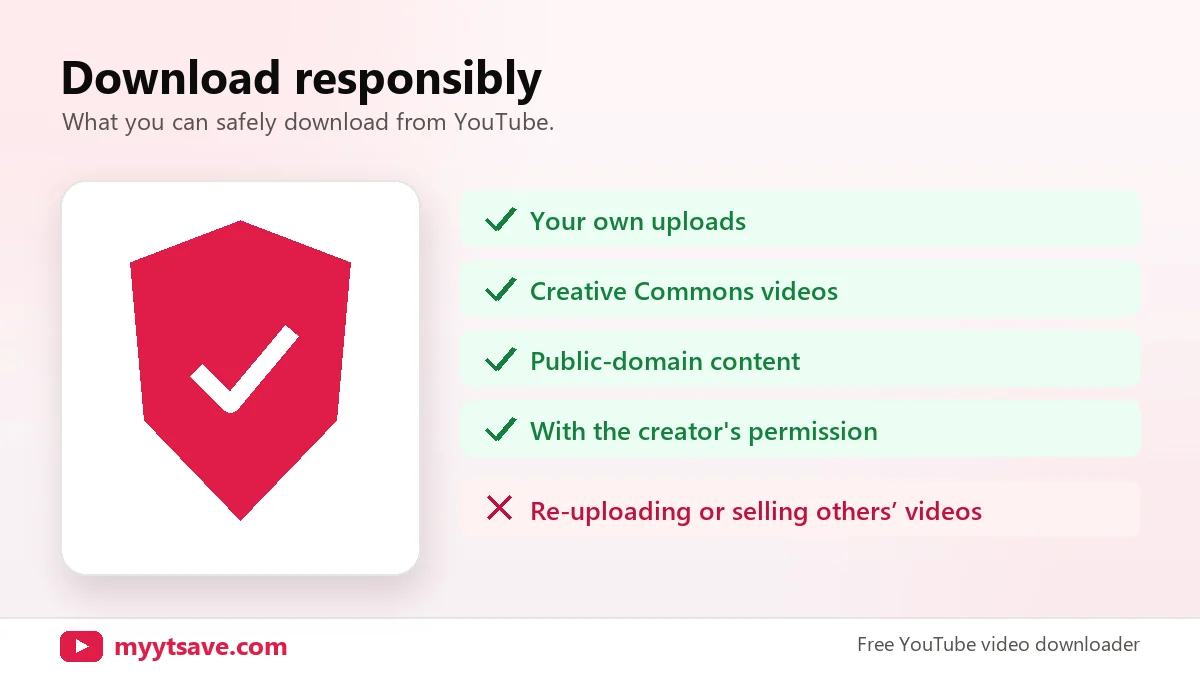
- Videos you uploaded yourself
- Videos marked Creative Commons (check under the description → License)
- Public-domain works, such as many older films and government videos
- Videos where the creator explicitly allows downloads
Things to avoid
- Re-uploading someone else’s video to your channel
- Selling or monetising downloaded content
- Downloading paid, members-only or rented content
Official ways to watch offline
YouTube Premium lets you download videos inside the YouTube app for offline viewing. YouTube Studio also lets creators download their own uploads.
The bottom line
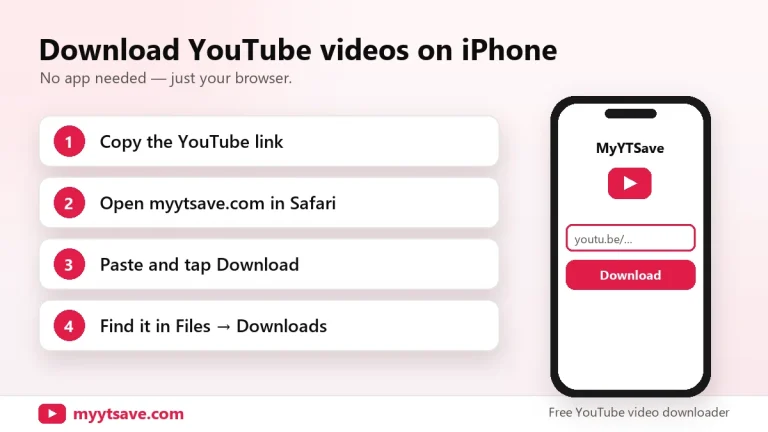
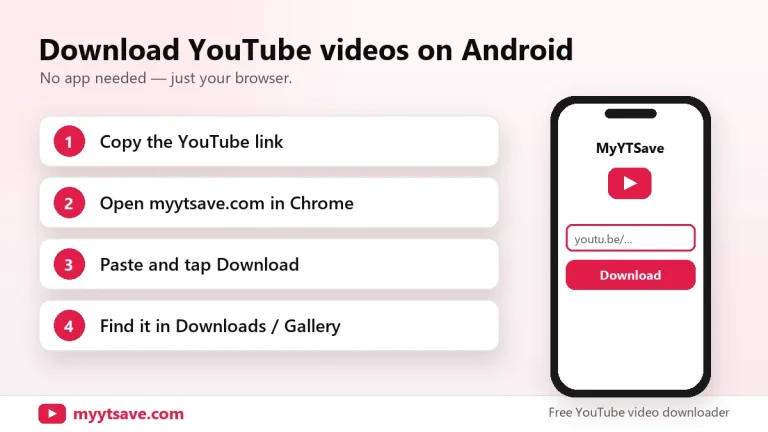
Use a downloader like MyYTSave for your own content and properly licensed videos, and ask creators before saving anything else. This article is general information, not legal advice.